Up to
83%
of patients were anxious when anticipating use of injectable
on-demand treatments (2022 survey; n=107 patients)5,§
This website is intended for US healthcare professionals.

Despite prophylaxis, many
patients with HAE continue to experience attacks1,2
In a 2021 analysis, over a
12-month span,
90% of patients
experienced attacks
despite prophylaxis2,*

Although guideline-recommended prophylaxis use reduces attack
frequency, attacks may continue
in all anatomic locations, including life-threatening laryngeal attacks.1,4
*Data were derived from a US-based, retrospective, real-world survey using the Adelphi HAE Disease Specific Program database (July-November 2021).2
†±19.7 doses of on-demand treatment. Data were derived from a retrospective, real-world study of 328 patients taking long-term prophylaxis using the IQVIA PharMetrics® Plus database (January 2016-September 2023).3
In a 2022 survey,
57%
of patients didn’t treat
all of their attacks
(n=107 patients)5,§

Up to
83%
of patients were anxious when anticipating use of injectable
on-demand treatments (2022 survey; n=107 patients)5,§
‡According to a 2023 US HAE Association survey of 94 patients taking either on-demand treatment or prophylaxis + on-demand treatment.6
§According to a 2022 US HAE Association survey of 107 patients taking either on-demand treatment or prophylaxis + on-demand treatment.5
HAE=hereditary angioedema; HAEA=US Hereditary Angioedema Association.
Delayed Administration of On-demand Treatment Can Exacerbate Symptoms and Prolong Attack Duration
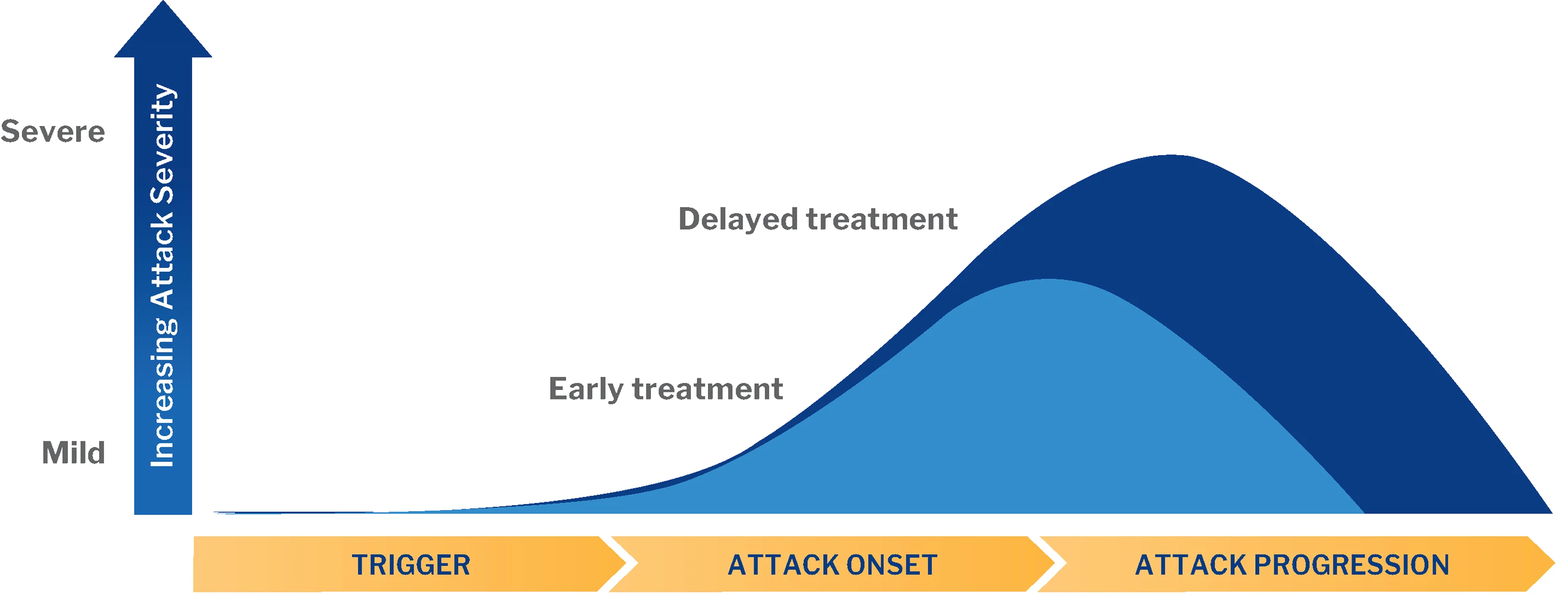
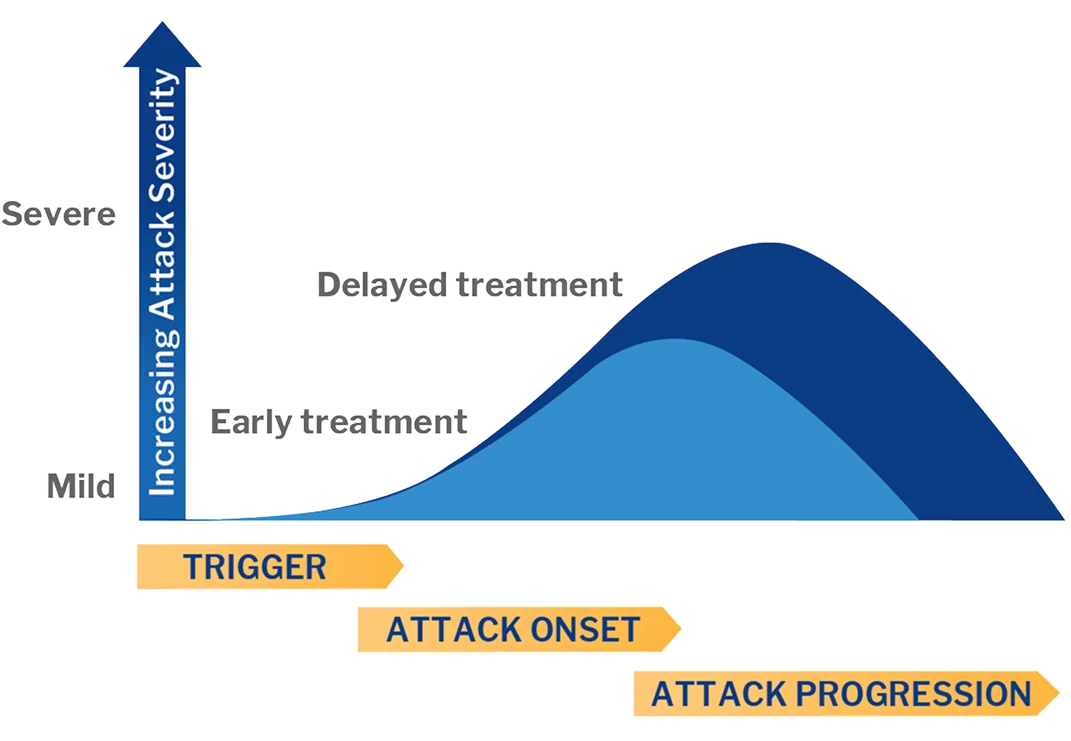
Adapted from Cohn Clin Transl Allergy 20237
On-demand treatment is an essential component of
HAE management4

Keep on-demand
treatment immediately
available

Treat early to stop
attacks from getting
worse

All attacks are eligible
for treatment
regardless of location
or severity

“AS PHYSICIANS, WE HAVE TO WALK A FEW STEPS IN PATIENTS’ SHOES…
WE CAN CLOSE THOSE GAPS BETWEEN WHERE WE ARE, WHERE THE GUIDELINES ARE, AND WHERE THE PATIENT IS.”
References:
1. Longhurst H. Optimum use of acute treatments for hereditary angioedema: evidence-based expert consensus. Front Med (Lausanne). 2018;4:245. doi:10.3389/fmed2017.00245
2. Anderson J, Soteres D, Tachdjian R, et al. Real-world outcomes in patients with hereditary angioedema prescribed lanadelumab versus other prophylaxis. Allergy Asthma Proc. 2024;45(6):426-433. doi:10.2500/aap.2024.45.240046
3. Data on File. KalVista Pharmaceuticals, Inc. 2025.
4. Busse PJ, Christiansen SC, Riedl MA, et al. US HAEA Medical Advisory Board 2020 guidelines for the management of hereditary angioedema. J Allergy Clin Immunol Pract. 2021;9(1):132-150.e3. doi:10.1016/j.jaip.2020.08.046
5. Betschel SD, Caballero T, Jones DH, et al. The complexities of decision-making associated with on-demand treatment of hereditary angioedema (HAE) attacks. Allergy Asthma Clin Immunol. 2024;20(1):43. doi:10.1186/s13223-024-00903-w
6. Christiansen S, O’Connor M, Craig T, et al. On-demand treatment of hereditary angioedema attacks: patient-reported utilization, barriers, and outcomes. Ann Allergy Asthma Immunol. 2025;134:570-579. doi:10.1016/j.anai.2024.12.012
7. Cohn DM, Aygören-Pürsün E, Bernstein JA, et al. Evaluation of patient-reported outcome measures for on-demand treatment of hereditary angioedema attacks and design of KONFIDENT, a phase 3 trial of sebetralstat. Clin Transl Allergy. 2023;13(9):e12288. doi:10.1002/clt2.12288
EKTERLY® (sebetralstat) is a plasma kallikrein inhibitor indicated for the treatment of acute attacks of hereditary angioedema (HAE) in adult and pediatric patients aged 12 years and older.
Adverse reactions: The most commonly reported adverse reaction was headache (3.2%).
Drug interactions: EKTERLY is a substrate of CYP3A4. Concomitant use of EKTERLY with a strong CYP3A4 inhibitor increases sebetralstat exposure, which may increase the risk of sebetralstat adverse reactions. Avoid use of EKTERLY with strong CYP3A4 inhibitors and reduce the dose of EKTERLY to one dose of 300 mg (one tablet) with moderate CYP3A4 inhibitors. Concomitant use of EKTERLY with a strong or moderate CYP3A4 inducer decreases sebetralstat exposure, which may decrease efficacy. The use of EKTERLY with strong or moderate CYP3A4 inducers is not recommended.
Use in specific populations: Avoid use of EKTERLY in patients with severe hepatic impairment (Child-Pugh Class C). The recommended dosage of EKTERLY is one dose of 300 mg (one tablet) in patients with moderate hepatic impairment (Child-Pugh Class B).
There are no available data on EKTERLY in pregnant women to evaluate for a drug-associated risk of major birth defects, miscarriage, or other adverse maternal or fetal outcomes. There are no data on the presence of sebetralstat or its metabolite in human milk, the effects on the breastfed infant, or the effects on milk production.
The safety and effectiveness of EKTERLY in pediatric patients aged under 12 years of age have not been established.
To report SUSPECTED ADVERSE REACTIONS, contact KalVista Pharmaceuticals, Inc. at 1-855-258-4782 or FDA at 1-800-FDA-1088 or www.fda.gov/medwatch.
Please see full Prescribing Information.